
VPN BasicsJanuary 21, 202515 min read

What is a VPN? Complete Guide to Virtual Private Networks in 2025

Discover what a VPN is, how it protects your online privacy, and why millions of users rely on VPN technology to secure their internet connection and data.

By SACVPN Team
#VPN#Privacy#Security#Beginner Guide
🔒

Understanding VPN Technology in 2025

In today's digital age, protecting your online privacy has never been more critical. A Virtual Private Network (VPN) is a powerful security tool that creates an encrypted tunnel between your device and the internet, ensuring your data remains private and secure from prying eyes. Whether you're concerned about hackers, government surveillance, or simply want to protect your personal information, understanding how VPNs work is essential for anyone who uses the internet.

VPN technology has evolved significantly over the years, transforming from a niche tool used primarily by corporations to a mainstream privacy solution used by millions of individuals worldwide. With cyber threats on the rise and online privacy concerns at an all-time high, VPNs have become an indispensable tool for protecting your digital life.

What Exactly is a VPN?

A Virtual Private Network (VPN) is a security service that creates a secure, encrypted connection over the internet. Think of it as a private tunnel through which your internet traffic flows, protected from anyone trying to spy on your online activities. When you connect to a VPN, all your internet data is routed through an encrypted tunnel to a VPN server, which then connects you to the websites and services you want to access.

The magic of a VPN lies in its ability to mask your real IP address and location. Instead of appearing to browse from your actual location, websites and online services see the IP address of the VPN server you're connected to. This provides a layer of anonymity and privacy that's crucial in today's interconnected world where your every online move can be tracked, logged, and potentially exploited.

VPNs work by establishing a point-to-point connection using dedicated connections, virtual tunneling protocols, or traffic encryption. Modern VPN services use advanced encryption protocols like WireGuard, OpenVPN, or IKEv2/IPSec to ensure your data remains secure even when transmitted over public networks like coffee shop WiFi or airport hotspots.

How Does a VPN Work? The Technical Details Made Simple

Understanding how a VPN works doesn't require a degree in computer science. At its core, a VPN performs three essential functions: encryption, tunneling, and IP masking. Let's break down each of these components to understand how they work together to protect your online privacy.

Encryption: Your Digital Lock and Key

Encryption is the process of scrambling your data so that only authorized parties can understand it. When you use a VPN, all the data leaving your device is encrypted using sophisticated algorithms before it enters the internet. Modern VPNs typically use AES-256 encryption, the same standard used by banks and military organizations worldwide.

This means that even if someone intercepts your data packets as they travel across the internet, they'll see nothing but scrambled, meaningless gibberish. Without the encryption key, which only you and the VPN server possess, the data is completely useless to eavesdroppers. This is particularly important when you're using public WiFi networks, where hackers often lurk waiting to intercept unencrypted data.

Tunneling: Your Private Highway Through the Internet

Tunneling is the process of wrapping your encrypted data packets inside another set of data packets. Imagine sending a sealed letter inside another envelope – that's essentially what VPN tunneling does. This creates a secure "tunnel" through which your data travels from your device to the VPN server.

Different VPN protocols use different tunneling methods. WireGuard, for example, uses state-of-the-art cryptography and minimal code to create extremely fast and secure tunnels. OpenVPN uses SSL/TLS for key exchange and has become an industry standard due to its reliability and strong security. The choice of protocol can significantly impact your VPN's speed, security, and reliability.

IP Masking: Hiding Your Digital Fingerprint

Every device connected to the internet has a unique IP (Internet Protocol) address, which serves as your device's digital identifier and location marker. Websites and online services can use your IP address to determine your approximate geographic location, track your browsing habits, and even deny you access based on where you're located.

When you connect to a VPN, your real IP address is hidden and replaced with the IP address of the VPN server you're connected to. This means websites see the VPN server's IP instead of yours, effectively masking your true location and identity. This is why VPNs are popular for accessing geo-restricted content and protecting your privacy from websites that track users across the internet.

Why Do You Need a VPN? Top Benefits Explained

The benefits of using a VPN extend far beyond simple privacy protection. In 2025, VPNs have become essential tools for various aspects of online life, from protecting sensitive business data to accessing entertainment content. Let's explore the most compelling reasons why millions of people worldwide use VPNs every day.

1. Protect Your Privacy and Personal Data

Your internet service provider (ISP) can see every website you visit, every video you stream, and every search query you make. In many countries, ISPs are legally allowed to collect, store, and even sell this data to third parties. Additionally, websites use sophisticated tracking technologies like cookies and browser fingerprinting to build detailed profiles of your online behavior.

A VPN prevents your ISP from seeing your browsing activity by encrypting all your internet traffic. All they can see is that you're connected to a VPN server – they have no idea what websites you're visiting or what data you're transmitting. This level of privacy is crucial for maintaining your digital autonomy and preventing unwanted surveillance.

2. Secure Your Connection on Public WiFi

Public WiFi networks at coffee shops, airports, hotels, and other public spaces are notoriously insecure. These networks often lack proper encryption, making it easy for hackers to intercept data transmitted by users on the same network. Cybercriminals use techniques like man-in-the-middle attacks to steal passwords, credit card information, and other sensitive data from unsuspecting users.

Using a VPN on public WiFi creates a secure tunnel for your data, making it impossible for hackers to intercept your information even on completely unsecured networks. This is especially important for remote workers, digital nomads, and frequent travelers who regularly depend on public WiFi to stay connected.

3. Bypass Geographic Restrictions and Censorship

Many streaming services, websites, and online platforms restrict access based on geographic location. Netflix, for instance, offers different content libraries in different countries. News websites may block access from certain regions, and some countries impose strict internet censorship that blocks access to popular websites and services.

By connecting to a VPN server in a different country, you can bypass these geographic restrictions and access content as if you were physically located in that country. This is particularly valuable for expatriates who want to access content from their home countries, travelers who want to maintain access to their usual services, and anyone living under restrictive internet censorship.

4. Prevent Bandwidth Throttling

Some internet service providers deliberately slow down your internet connection when they detect certain types of traffic, such as video streaming or torrenting. This practice, known as bandwidth throttling, can significantly degrade your online experience, causing buffering videos, slow downloads, and laggy online gaming.

Since a VPN encrypts all your internet traffic, your ISP cannot see what type of content you're accessing, making it impossible for them to selectively throttle your connection. This ensures you get the full bandwidth you're paying for, regardless of what you're doing online.

5. Protect Against Cyber Threats

VPNs provide an additional layer of security against various cyber threats. By hiding your real IP address, VPNs protect you from DDoS (Distributed Denial of Service) attacks, which can overwhelm your connection and knock you offline. This is particularly important for gamers, streamers, and anyone who makes their IP address publicly accessible.

Additionally, many premium VPN services include built-in features like ad blockers, malware protection, and phishing filters that provide comprehensive protection against a wide range of online threats. These features work alongside the VPN's encryption to create a robust security solution.

Types of VPN Protocols: Understanding Your Options

VPN protocols are the methods by which your device connects to a VPN server. Different protocols offer different advantages in terms of speed, security, and compatibility. Understanding the main types of VPN protocols can help you make informed decisions about which VPN service to use.

WireGuard: The Modern Standard

WireGuard is the newest VPN protocol and has quickly become the gold standard for modern VPN services like SACVPN. Released in 2020, WireGuard uses state-of-the-art cryptography and features a minimal codebase of just 4,000 lines compared to OpenVPN's 100,000+ lines. This simplicity makes it easier to audit for security vulnerabilities and ensures better performance.

WireGuard offers exceptional speed, often 2-3 times faster than OpenVPN while using less battery power on mobile devices. Its innovative approach to key management and connection handling makes it ideal for modern mobile devices that frequently switch between WiFi and cellular networks. The protocol has been thoroughly vetted by security experts and is now integrated into the Linux kernel, demonstrating its reliability and security.

OpenVPN: The Reliable Workhorse

OpenVPN has been the industry standard for years and remains one of the most secure and reliable VPN protocols available. It's open-source, meaning its code can be examined by anyone for security vulnerabilities. OpenVPN can operate on either TCP or UDP protocols, offering flexibility for different use cases – TCP for reliability and UDP for speed.

While OpenVPN may not be as fast as WireGuard, it's extremely stable and works well even on networks with strict firewall rules. Its widespread adoption means excellent compatibility across virtually all platforms and devices. Many corporate VPNs still rely on OpenVPN due to its proven track record and extensive configuration options.

IKEv2/IPSec: The Mobile Champion

IKEv2 (Internet Key Exchange version 2) paired with IPSec is particularly popular for mobile VPN users due to its excellent stability when switching between WiFi and cellular networks. This protocol excels at re-establishing VPN connections quickly when your device changes networks or temporarily loses connectivity, making it ideal for smartphones and tablets.

IKEv2/IPSec offers strong security and fast connection speeds, though not quite as fast as WireGuard. It's natively supported on iOS, macOS, and Windows devices, making it easy to configure without additional software. However, it may struggle with restrictive firewalls since it uses specific UDP ports that can be easily blocked.

Choosing the Right VPN Service: What to Look For

With hundreds of VPN services available, choosing the right one can be overwhelming. Not all VPNs are created equal – some prioritize speed, others focus on security, and unfortunately, some make promises they can't keep. Here are the key factors to consider when selecting a VPN service.

Security and Privacy Features

The primary purpose of a VPN is security, so this should be your top consideration. Look for services that use modern encryption standards (AES-256 or ChaCha20), support current VPN protocols like WireGuard or OpenVPN, and have a strict no-logs policy that has been independently audited. A kill switch feature is essential – it automatically disconnects your internet if the VPN connection drops, preventing data leaks.

Additionally, consider whether the VPN service is based in a privacy-friendly jurisdiction. Countries that are part of intelligence-sharing agreements like the Five Eyes (US, UK, Canada, Australia, New Zealand) or Fourteen Eyes may be compelled to share user data with governments. VPN providers based in privacy-respecting countries like Switzerland or Panama may offer stronger privacy protections.

Speed and Performance

A VPN inevitably adds some overhead to your internet connection due to the encryption and routing process. However, a quality VPN service should minimize this impact. The best VPNs use modern protocols like WireGuard that are optimized for speed and maintain a large network of servers to prevent congestion.

Server location matters significantly for performance. Connecting to a server geographically closer to you typically results in faster speeds and lower latency. Quality VPN providers operate servers in numerous countries worldwide, giving you options to choose servers near your location for optimal performance.

Ease of Use and Compatibility

A VPN should be easy to use, even for non-technical users. Look for services with intuitive apps for all your devices – Windows, macOS, iOS, Android, and Linux. The ability to connect multiple devices simultaneously is important if you want to protect your entire household. Some VPNs also support router installation, which protects all devices on your network with a single VPN connection.

The best VPN services offer one-click connection, automatic server selection based on your location and needs, and clear status indicators so you always know when you're protected. Features like automatic connection on untrusted networks and custom routing rules (split tunneling) enhance usability for advanced users.

Customer Support and Reliability

Even the best VPN services can encounter issues, so responsive customer support is crucial. Look for providers that offer 24/7 support through multiple channels – live chat, email, and comprehensive knowledge bases. The ability to quickly resolve connection issues, configuration problems, or billing questions can make the difference between a frustrating and seamless VPN experience.

Reliability is equally important. Your VPN should maintain stable connections without frequent disconnections or speed fluctuations. Check reviews and user testimonials to gauge real-world reliability. A VPN that works perfectly 95% of the time is frustrating – you need one that works 99.9% of the time.

Common VPN Myths and Misconceptions

Despite VPNs becoming mainstream, several myths and misconceptions persist. Let's debunk some of the most common misunderstandings about VPN technology.

Myth 1: "VPNs Make You Completely Anonymous"

While VPNs significantly enhance your privacy, they don't make you completely anonymous. VPNs hide your IP address and encrypt your traffic, but websites can still track you through cookies, browser fingerprinting, and login credentials. For complete anonymity, you'd need to combine a VPN with other privacy tools like Tor, privacy-focused browsers, and careful browsing habits.

Myth 2: "VPNs Are Only for Illegal Activities"

This misconception stems from the fact that VPNs can mask your online activities. In reality, VPNs are legitimate privacy tools used by millions of law-abiding citizens, businesses, journalists, and activists worldwide. Using a VPN is legal in most countries and is simply a smart way to protect your privacy and security online.

Myth 3: "Free VPNs Are Just as Good"

Free VPN services have to make money somehow, and they often do so by logging and selling your browsing data, injecting ads, or offering severely limited speeds and data caps. Many free VPNs have been caught installing malware, selling user data, or operating with weak security. A reputable paid VPN service is a worthwhile investment in your online security and privacy.

Myth 4: "VPNs Always Slow Down Your Connection"

While it's true that VPNs add some overhead, modern protocols like WireGuard are so efficient that the speed impact is minimal with quality VPN services. In some cases, VPNs can even improve speeds by bypassing ISP throttling or routing your traffic more efficiently. The speed reduction you experience depends heavily on the VPN protocol, server location, and quality of the VPN service.

Getting Started with SACVPN: Your Path to Online Privacy

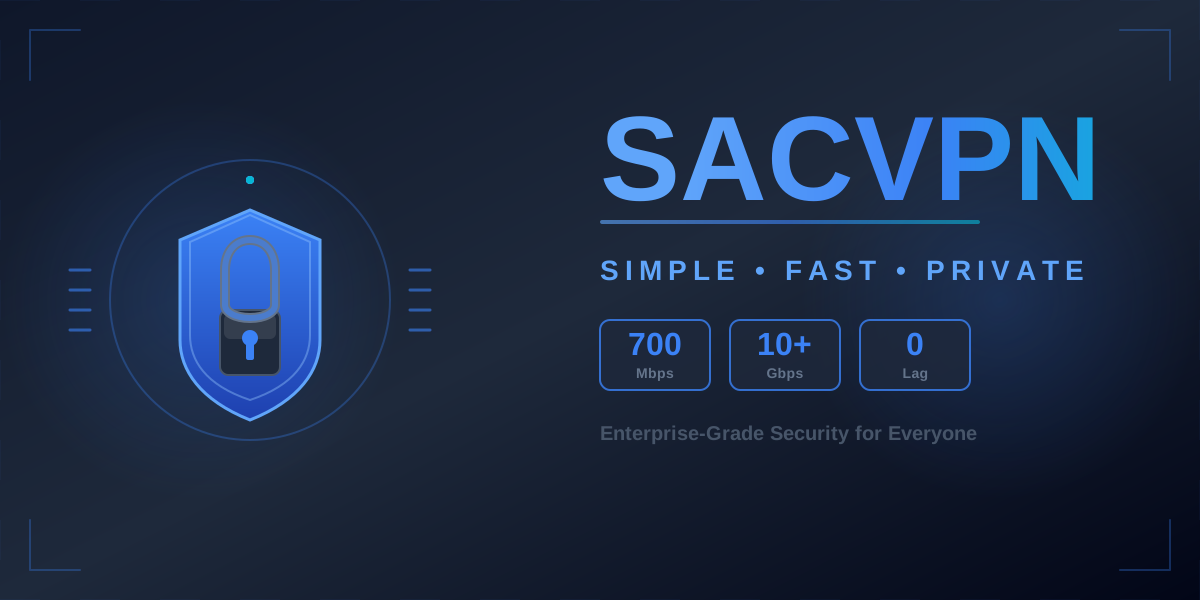
Understanding VPN technology is the first step toward taking control of your online privacy and security. SACVPN makes it easy to get started with WireGuard-powered VPN protection. Our service combines cutting-edge WireGuard protocol technology with user-friendly apps, ensuring you get the perfect balance of security, speed, and ease of use.

Whether you're protecting a single device or securing your entire home network through a VPN-configured router, SACVPN provides the tools and support you need. Our no-logs policy, strong encryption, and global server network ensure your data stays private while you enjoy fast, reliable internet access from anywhere in the world.

Conclusion: VPNs as Essential Digital Tools

In 2025, VPNs have evolved from optional privacy tools to essential components of digital security. With cyber threats increasing, privacy concerns mounting, and geographic restrictions expanding, having a reliable VPN service is no longer a luxury – it's a necessity for anyone who values their online privacy and security.

By creating an encrypted tunnel for your internet traffic, masking your IP address, and protecting you from various online threats, VPNs provide comprehensive protection that empowers you to take control of your digital life. Whether you're working remotely, streaming content, gaming online, or simply browsing the web, a VPN ensures your activities remain private and secure.

The key is choosing a VPN service that prioritizes your privacy, delivers consistent performance, and provides the features you need. With the right VPN protecting your connection, you can browse the internet with confidence, knowing your data is encrypted, your location is hidden, and your privacy is preserved. In an increasingly connected world, that peace of mind is invaluable.

Ready to Protect Your Privacy?

Join thousands of users who trust SACVPN for fast, secure, and private internet access powered by WireGuard technology.

View Pricing Plans